Showing posts with label Christians. Show all posts

Monday, 9 January 2012

The Black Nazarene

Being driven home tonight I asked Freddy, our Filipino driver which route he would take, the normal one which seems to have been very slow lately or EDSA (a massive 4+ lane highway in each direction) which it seems everyone avoids like the plague as the traffic is even slower, although our recent attempts in desperation have been slow but not nearly as slow as the route to avoid EDSA. Traffic is always slow in Manila! Well at least always EXCEPT if you leave just over 2 hours to get to the airport two days before Christmas because "the roads will be crazy as well as the airport" only to find the journey was in record time leaving an extra 90 minutes in the airport before I could even check-in!

Freddy quickly told us he would go the normal route as EDSA would be very busy and gave a reason why. We had to get him to repeat a few times before we worked out there was going to be a procession from the Catholic church of a statue of a black Jesus (the Black Nazarene). For details of the celebration which I had to look up later see Description of the Feast of the Black Nazarene and a few photos Photos of the festival.

There was Freddy, me and two other Brits in the car, which made for one "slightly religious" Catholic, a Christian of non-Catholic background, a Muslim and an agnostic. As it happens the life-sized statue of Jesus wasn't black to begin with but got charred when it was caught in a fire on the boat bringing it from Mexico, but I didn't know that until my Google searching later, so we had quite an interesting conversation on why a black Jesus and how it was no less realistic than the many very European/Caucasian portrayals of him that fill our consciousness. After all Jesus came from a Arab region of the world. Freddy made the good point that no-one knows what Jesus looks like and I surprised my Muslim colleague when I referred to the Biblical prophecy of Jesus that described him almost as physically ugly yet so many artists have tried to portray him with a glorified physical beauty.
He had no beauty or majesty to attract us to him, nothing in his appearance that we should desire him. (Isaiah 53:2)
So if God who had the choice to give Jesus any kind of body he may have wished to do chose to give him one "which had no beauty or majesty to attract us" why are some people so determined to change Jesus to make him more "attractive" to people and why are many Christians as influenced by public appearance and vanity as those who are not Christians?

Friday, 30 December 2011

Faith

Looking through this years photos today trying to pull some together for an end of year summary my eye was caught by the following that I took on the shores of the Sea of Galilee earlier this year.


Monday, 12 December 2011

Christmas Carols: O Little Town of Bethlehem


Every shopping experience in Manila since mid-November has involved Christmas carols and to my surprise most of them have been carols as opposed to Christmas songs like Jingle Bells and Frosty the Snowman. Joy to the World and Hark the Herald Angels seem to head the charts.

O little town of Bethlehem
How still we see thee lie
Above thy deep and dreamless sleep
The silent stars go by
Yet in thy dark streets shineth
The everlasting Light

The hopes and fears of all the years
Are met in thee tonight

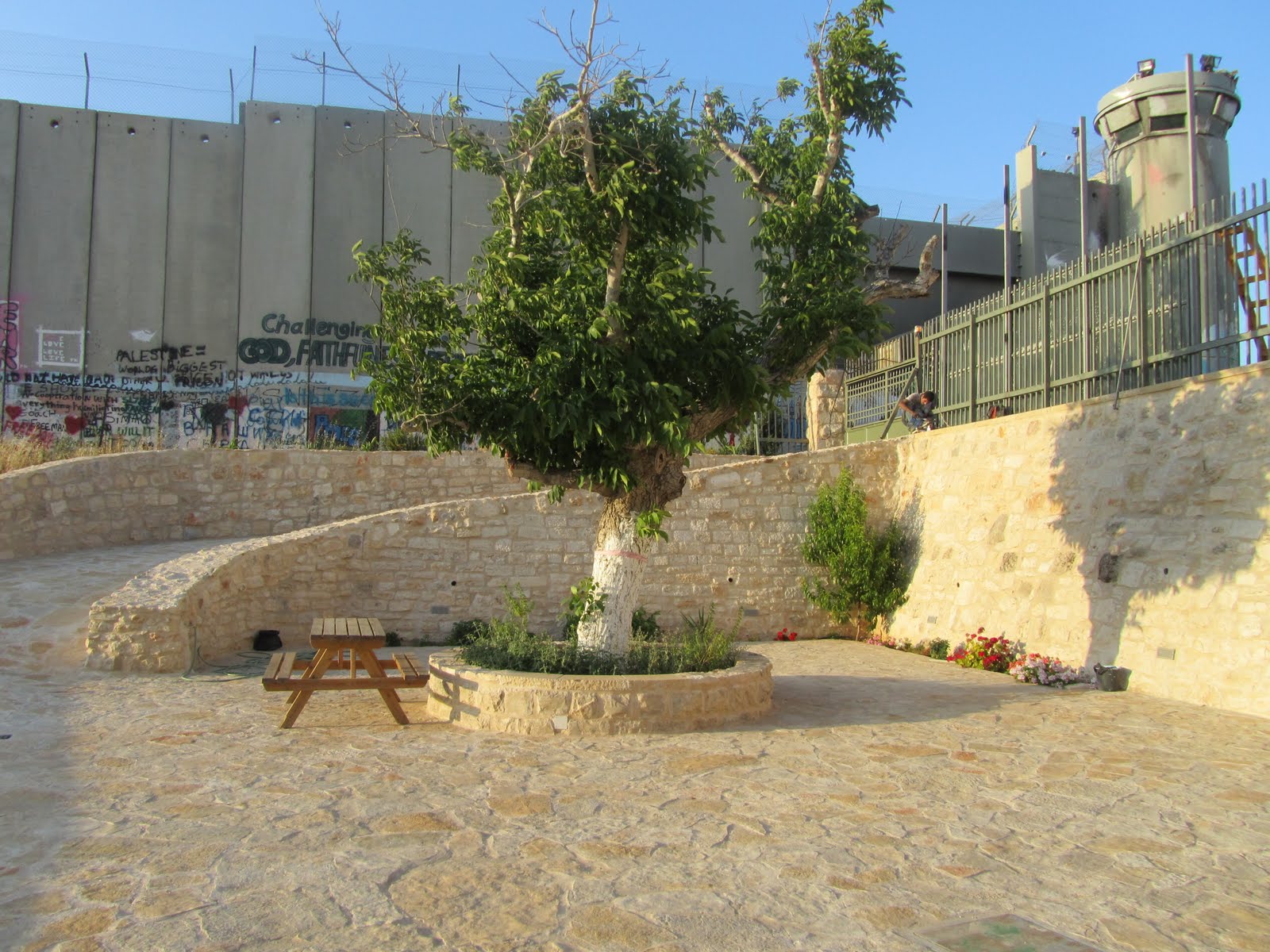
I had the privilege to visit Bethlehem earlier this year to see the town where Christ was born, but to do that I had to pass through military checkpoints since the Israeli's through fear have encircled the town with a 30 foot high wall.

For Christ is born of Mary
And gathered all above
While mortals sleep, the angels keep

Their watch of wondering love
O morning stars together
Proclaim the holy birth
And praises sing to God the King

And Peace to men on earth

Needless to say the experience for tourists is surprising but fairly straightforward, however for the few Palestinians who have a permit to leave Bethlehem the experience is far different, like entering and leaving the "open-air" prison that they are subject to. The young Israeli soldiers who man the checkpoints and towers on the wall do not "watch with wondering love" the people of Christ's birth community.


How silently, how silently
The wondrous gift is given!
So God imparts to human hearts
The blessings of His heaven.
No ear may hear His coming,

But in this world of sin,
Where meek souls will receive him still,
The dear Christ enters in.

Palestinian Christians point out that if Jesus were born now the military restrictions would mean that Mary and Joseph could not make the journey from Nazareth (in Israel) to Bethlehem (in the West Bank). Fear is real and injustices many in the Holy Land and yet God is not disconnected from this pain, grief and anger. Jesus entered a world of sin, along with occupation and injustice. He did not enter because he had to, he entered because his love gave him no alternative. He was born in Bethlehem due to the occupying powers decree for a census for taxation. 

O holy Child of Bethlehem
Descend to us, we pray
Cast out our sin and enter in
Be born to us today
We hear the Christmas angels
The great glad tidings tell
O come to us, abide with us
Our Lord Emmanuel  


Sunday, 4 December 2011

Sanitised Sacrifice

Have been mulling over this blog post for a few weeks now and finally decided to put fingers to the keyboard! As I mentioned in a previous blog last month was the Muslim festival of Eid ul-Fitr and whilst the Philippines is a rare, majority Christian country in Asia in respect to the minority Muslim population Eid ul-Fitr was declared a national holiday. Needless to say none of the non-Muslims were unhappy about getting an extra day off work, myself included!

Whilst I learnt the basics about the "Five Pillars of Islam" in religious education classes in secondary school I had heard nothing about Eid until I lived in Guyana, where due to the diversity of the population Hindu, Christian and Muslim festivals were celebrated as national holidays.I have learnt there are two Eids - Eid ul-Fitr and Eid al-Adha and was interested to hear a conversation between my Muslim boss and a colleague who has spent a lot of years living in the Middle East about how different countries view one or the other as the Great Eid as opposed to Little Eid.

Eid ul-Fitr is the celebration of the end of Ramadan, the month of fasting and it seems only appropriate to me that that would be celebrated with a great feast and as I watched the regional news from Hong Kong the coverage was about the trade at livestock markets in the days running up to Eid. It is also the start of the Haaj, the pilgrimage to Mecca (Ramadan and the Haaj being two of the five pillars of Islam if my memory from all those years ago still serves me well enough).

In Guyana I was surprised to discover the basis of Eid al-Adha, which is the celebration of Abraham being willing to take his son Ishmael up the mountain to sacrifice him in obedience to Allah. At the last moment Allah instructs him not to sacrifice Ishmael and instead provides a goat. I remember being stunned how closely this matches the Biblical story, only that as Christians we believe that it was Isaac the second son of Abraham but the son of the promise of God who was taken to be sacrificed. Until then I had viewed Islam as an alien faith so dissimilar to Christianity. After that I found I could feel much more comfortable in Muslim celebrations, unlike the Hindu ones. Allah is simply the Arabic word for God, used even before the birth of Mohammed.

At Eid al-Adha a Muslim family buys a cow, sheep or goat according to their means. It is then slaughtered remembering the sacrificial goat that God provided to Abraham, the meat is then divided into thirds - a third for family, a third for friends and a third for the poor (giving to the poor being the third of the five pillars).

Having just finished reading of all the sacrifices required of the Israelites in Leviticus and Numbers in the Bible and how important the blood was I am struck by how as Christians we have forgotten what a bloody system of sacrifice we have been saved from. The week before Eid and the TV coverage of livestock markets I had almost seen a sacrifice at a work site not far from where I work in Manila. It was strange to see a tied up goat being dragged out onto the construction, I even glimpsed the knife in the hand of one of the workers, but it wasn't until an Asian colleague explained to me the goat was to be slaughtered for good luck in the work that it really dawned on me. I'm pleased to say the process was delayed once the guys caught sight of me, deciding for whatever reason that it would be better not to have an outsider for a spectator.

When as Christians we talk of Christ coming as a baby at Christmas and the purpose of his life being to be sacrificed as an offering to pay the price of justice for our wrong doing, it seems just like words, it seems sanitised not the bloody mess that it really was. Both those of faith and those of no-faith have a tendency to talk of sacrifice in a very understated way, instead of a "small inconvenience" it is a "sacrifice" that we are making - very rarely are our sacrifices, even our living sacrifices much of a sacrifice at all.

Monday, 28 November 2011

Value of education 2

The church I am attending CCF Ortigas is in the process of finishing building a new nearby complex including a worship centre and school in Pasig (a municipality of Metro Manila) just up the road from the existing location in Ortigas, which will mean that sometime next year it will probably be moving from its current location on the top two floors of a local shopping mall. I was impressed a couple of weeks ago when a new programme was explained that the church are encouraging all its members to get involved with some how.

CCF leadership had met with the local government of Pasig and asked them what they felt were the most pressing needs of the area and how they could be involved in trying to help with these needs. The councillors advised that the greatest concern was the quantity of out-of-school youth - apparently around 60% of Filipino youth do not graduate from High School. In a nation of 92 million people and where according to UN statistics more than 33% of the population (ie about 30 million people) is between the ages of 0 and 14 that is an awful lot of under-educated young people.

The church in conjunction with the local government has set up the Uplift Pilipinas Movement (God of this City - Uplift Pilipinas Movement video)   to H.E.L.P in the areas of Health and nutrition, Education and values formation, Livelihood and jobs and finally Peace and cleanliness. The immediate goal is to set up a programme for 1200 Out-of-School youth to enable them to achieve a High School Diploma equivalent through an Alternative Learning System (ALS video) and members of the church are being asked to sponsor around US$10 a month towards the costs of running this programme.

Having been involved in a small church of mostly foreigners in Nicaragua it has been a change to be attending a massive church made up almost exclusively of Filipinos here in Manila, but I am thrilled to see the local church under local leadership so involved in trying to address the many needs in their nation in such a constructive and collaborative way.

Sunday, 27 November 2011

CPS Test

Last Sunday the speaker at church introduced us to the CPS Test as a way of evaluating our Christian lives. It sounded like a complex model such as the Briggs-Meyer test but actually turned out to be very simple, simple if you understood Tagalog at least.

The CPS test stood for "Christian pala sya!" which by listening to the context, explanation and then looking in the dictionary all confirmed this was whether someone who knew you would be surprised if they learnt from someone else that you were a Christian "S/he's a Christian, really?!" I thought "pala" just meant spade like in Spanish and it is one of the words that is the same in Spanish and Tagalog in that definition but "pala" also means "an expression of surprise"

The question was would anyone notice that you had faith in a living, loving and holy God as you lived your life day to day? Or would they only know if they saw you "playing" religion at certain hours on a Sunday. Not a false, superior, holier than thou, religious speak faith but a real one that effects every part of our lives.

Saturday, 25 June 2011

Bethlehem's Pressures

Having visited Bethlehem earlier in this month in my first ever visit to Israel and Palestine, I was surprised to catch on BBC iPlayer last week an interview given by the Archbishop of Canterbury on "World at One" where he mentioned the pressure that Christians were under in Bethlehem as part of general comments on the difficulties Christians face in the Middle East. His rationale was that the Christian population was reducing due to migration partly for economic reasons and also as a result of the pressure that they felt due to the movement of more Muslims into the area as they in turn escaped the pressures of other towns like Hebron. Archbishop of Canterbury on World at One 14 June 2011

Not once in the interview did the Archbishop mention the words "Israel" or "occupation". Whatever one's views of the Israel/Palestinian problem it is not possible to talk about the situation of Christians in Bethlehem or any other part of the West Bank without mentioning Israel. Hearing the interview reminded me of an article I'd read in The Guardian the week before I went to Israel on the bias in the BBC's reporting on Israel and Palestine and the strength of the pro-Israel lobby in challenging anything reported which they could see as negative about their actions in Israel or the Occupied Territories. Had the Archbishop been told he couldn't mention Israel? And why would he comply with such a comment? Dr Rowan Williams seems a highly intelligent man with a desire for justice, why would he so misrepresent the situation? Certainly Christians in Bethlehem were not pleased with his comments. Letter from Kairos Palestine. It is important to be able to speak out against Israeli state policy or unjust incidents, without being afraid of the challenge of being anti-Semitic. If for example I were to speak out against the war in Iraq and British policy there it does not make me anti-British, simply opposed to a policy.

During our 5 days in Bethlehem as a church group we had the privilege of meeting a number of Palestinian Christians of different denominations, all of whom under difficult circumstances believed in non-violent means of attaining justice and peace for Palestine. Not one of them mentioned pressure from an increased Muslim population in the town, all be it that there has been an increase. Instead they mentioned the oppression of the 9m high wall which surrounds the town and most of the West Bank, including large areas that the UN in 1948 allocated to Palestine. Only about 5% of the Bethlehem population have permits to go into Israel on the other side of the wall and the few that can go to work in Jerusalem only 6 miles away have to queue for at least 2 hours each morning to get through the security checkpoints at the one exit Palestinians are allowed to use. The wall and it's watchtowers dominate the town and as in all the West Bank divide people from their land or their customers.  As a couple of Bethlehem residents commented wryly, if Jesus were to be born these days, the wall and checkpoints would prevent Mary and Joseph from reaching Bethlehem from Nazareth. Worse still are the checkpoints within the West Bank which limit the movement of Palestinians from one town to another that are supposedly under their control as part of the Oslo Accord.


What I did learn during my 7 days in the Holy Land is far more than I can fit in a few blog posts, but despite the fact I thought I was a person with an above average grasp of world affairs I realised more than anything how little I really knew, how difficult solutions are but how unsustainable the current oppression of Palestinians is and how difficult Israeli policy makes it for everyday Israelis and Palestinians to get to know one another. Israel, however is certainly not alone in this world, in taking the natural shock and fear related to acts of violence which have been perpetuated against their people (as well as the Palestinians) and using it to breed a culture of fear and of the idea of having a superior claim to righteousness in one's cause. Sadly over the last century a far greater number of Jews have lost their lives at the hands of Europeans than of Arabs.

I suspect reflections on my trip will constitute the main part of the next few posts I make, but for now I'll end commenting on how surprised I was with the warmth of the welcome we felt from the people we met in Bethlehem, not only our guides and special guests, but people working in shops and wedding guests awaiting the exit of the bride and groom at the Church of the Nativity. I could walk alone on the streets without feeling the unease you can in some other parts of the world.