Have been mulling over this blog post for a few weeks now and finally decided to put fingers to the keyboard! As I mentioned in a previous blog last month was the Muslim festival of Eid ul-Fitr and whilst the Philippines is a rare, majority Christian country in Asia in respect to the minority Muslim population Eid ul-Fitr was declared a national holiday. Needless to say none of the non-Muslims were unhappy about getting an extra day off work, myself included!
Whilst I learnt the basics about the "Five Pillars of Islam" in religious education classes in secondary school I had heard nothing about Eid until I lived in Guyana, where due to the diversity of the population Hindu, Christian and Muslim festivals were celebrated as national holidays.I have learnt there are two Eids - Eid ul-Fitr and Eid al-Adha and was interested to hear a conversation between my Muslim boss and a colleague who has spent a lot of years living in the Middle East about how different countries view one or the other as the Great Eid as opposed to Little Eid.
Eid ul-Fitr is the celebration of the end of Ramadan, the month of fasting and it seems only appropriate to me that that would be celebrated with a great feast and as I watched the regional news from Hong Kong the coverage was about the trade at livestock markets in the days running up to Eid. It is also the start of the Haaj, the pilgrimage to Mecca (Ramadan and the Haaj being two of the five pillars of Islam if my memory from all those years ago still serves me well enough).
In Guyana I was surprised to discover the basis of Eid al-Adha, which is the celebration of Abraham being willing to take his son Ishmael up the mountain to sacrifice him in obedience to Allah. At the last moment Allah instructs him not to sacrifice Ishmael and instead provides a goat. I remember being stunned how closely this matches the Biblical story, only that as Christians we believe that it was Isaac the second son of Abraham but the son of the promise of God who was taken to be sacrificed. Until then I had viewed Islam as an alien faith so dissimilar to Christianity. After that I found I could feel much more comfortable in Muslim celebrations, unlike the Hindu ones. Allah is simply the Arabic word for God, used even before the birth of Mohammed.
At Eid al-Adha a Muslim family buys a cow, sheep or goat according to their means. It is then slaughtered remembering the sacrificial goat that God provided to Abraham, the meat is then divided into thirds - a third for family, a third for friends and a third for the poor (giving to the poor being the third of the five pillars).
Having just finished reading of all the sacrifices required of the Israelites in Leviticus and Numbers in the Bible and how important the blood was I am struck by how as Christians we have forgotten what a bloody system of sacrifice we have been saved from. The week before Eid and the TV coverage of livestock markets I had almost seen a sacrifice at a work site not far from where I work in Manila. It was strange to see a tied up goat being dragged out onto the construction, I even glimpsed the knife in the hand of one of the workers, but it wasn't until an Asian colleague explained to me the goat was to be slaughtered for good luck in the work that it really dawned on me. I'm pleased to say the process was delayed once the guys caught sight of me, deciding for whatever reason that it would be better not to have an outsider for a spectator.
When as Christians we talk of Christ coming as a baby at Christmas and the purpose of his life being to be sacrificed as an offering to pay the price of justice for our wrong doing, it seems just like words, it seems sanitised not the bloody mess that it really was. Both those of faith and those of no-faith have a tendency to talk of sacrifice in a very understated way, instead of a "small inconvenience" it is a "sacrifice" that we are making - very rarely are our sacrifices, even our living sacrifices much of a sacrifice at all.
Showing posts with label Guyana. Show all posts
Showing posts with label Guyana. Show all posts
Sunday, 4 December 2011

Tuesday, 29 November 2011
Converted to Blue
One of the things that Westerners living in or visiting poorer countries tend to comment on is how pristine school children look dressed in their uniforms coming out of areas which look like it should be impossible to keep anything clean and that running water is not something to be relied upon or taken for granted. I remember the shock I first felt seeing school children in some areas of Guyana and it is no different in Nicaragua or the Philippines. Each day as I'm driven to work we pass very poor communities with children coming out in beautiful white shirts and even going home looking as pristine, or as a friend put in his blog recently looking cleaner than his kids did when they left for school in the morning (Krish's impressions of Haiti).
In Guyana many of my local friends used "blue" a laundry soap which you'll be amazed to hear is coloured blue! However coming from a land of washing machines I felt it must be much better to use laundry powder to wash my clothes even by hand than a bar of soap. Of course I should have known better: that it's normally worth following the local way of doing things as there is a reason why it's done that way, but I never ventured to try. That was over ten years ago.
On moving to Malaysia a couple of months ago and not having yet found my well hidden washing machine in the apartment I thought I'd have to resort to hand washing again and stumbled across "blue" in the supermarket so I thought I'd give it a try. I have a great propensity for spilling things on my clothes or getting mess and oil stains from work and I've never found a good way to get the stains out, not long soaks or scrubbing nor Vanish, so I finally decided to try "blue" and so easily the stains scrubbed out. I am converted and could have been over 10 years ago if only I hadn't subconsciously felt my ways from mechanised, developed countries must be best.
In Guyana many of my local friends used "blue" a laundry soap which you'll be amazed to hear is coloured blue! However coming from a land of washing machines I felt it must be much better to use laundry powder to wash my clothes even by hand than a bar of soap. Of course I should have known better: that it's normally worth following the local way of doing things as there is a reason why it's done that way, but I never ventured to try. That was over ten years ago.
On moving to Malaysia a couple of months ago and not having yet found my well hidden washing machine in the apartment I thought I'd have to resort to hand washing again and stumbled across "blue" in the supermarket so I thought I'd give it a try. I have a great propensity for spilling things on my clothes or getting mess and oil stains from work and I've never found a good way to get the stains out, not long soaks or scrubbing nor Vanish, so I finally decided to try "blue" and so easily the stains scrubbed out. I am converted and could have been over 10 years ago if only I hadn't subconsciously felt my ways from mechanised, developed countries must be best.
Saturday, 12 November 2011
Hungry anyone?
Found food in Hong Kong last weekend very photogenic but not very appetising. Tried one meal but was unable to finish the vegetable curry and faro dumplings, the taste of the dumpling was all wrong as was the texture of the curry. Then I really struggled with the concept of picking my fresh seafood from an on site aquarium.


 Food is often one of the biggest challenges and can be one of the greatest pleasures in living in a new country. Not only are you confronted by all sorts of new foods and simply trying to figure out what they are, how to eat them and whether you like them or think your taste buds can adapt to them, there is also the challenge of working out how to buy the raw ingredients, what they are and how to cook them. I remember cooking revolting calaloo before I learnt you had to cut the stem out or appalling a friend in Guyana when I cooked squash without peeling it first. Of course western style supermarkets in Manila mean I can choose to stay with only the known foodstuffs but that doesn't seem very adventurous.
I do think that adjusting to Chinese cuisine and cooking would be a real challenge for the Westerner, it's perhaps the hardest cuisine to get enthusiastic about. Meanwhile, I get a desire for gallo pinto or nacatamales (Nicaragua) or chicken curry and roti or salt fish and bake (Guyana) about as often as I crave fish and chips or roast beef and Yorkshire pudding (England) showing the ability to adapt.


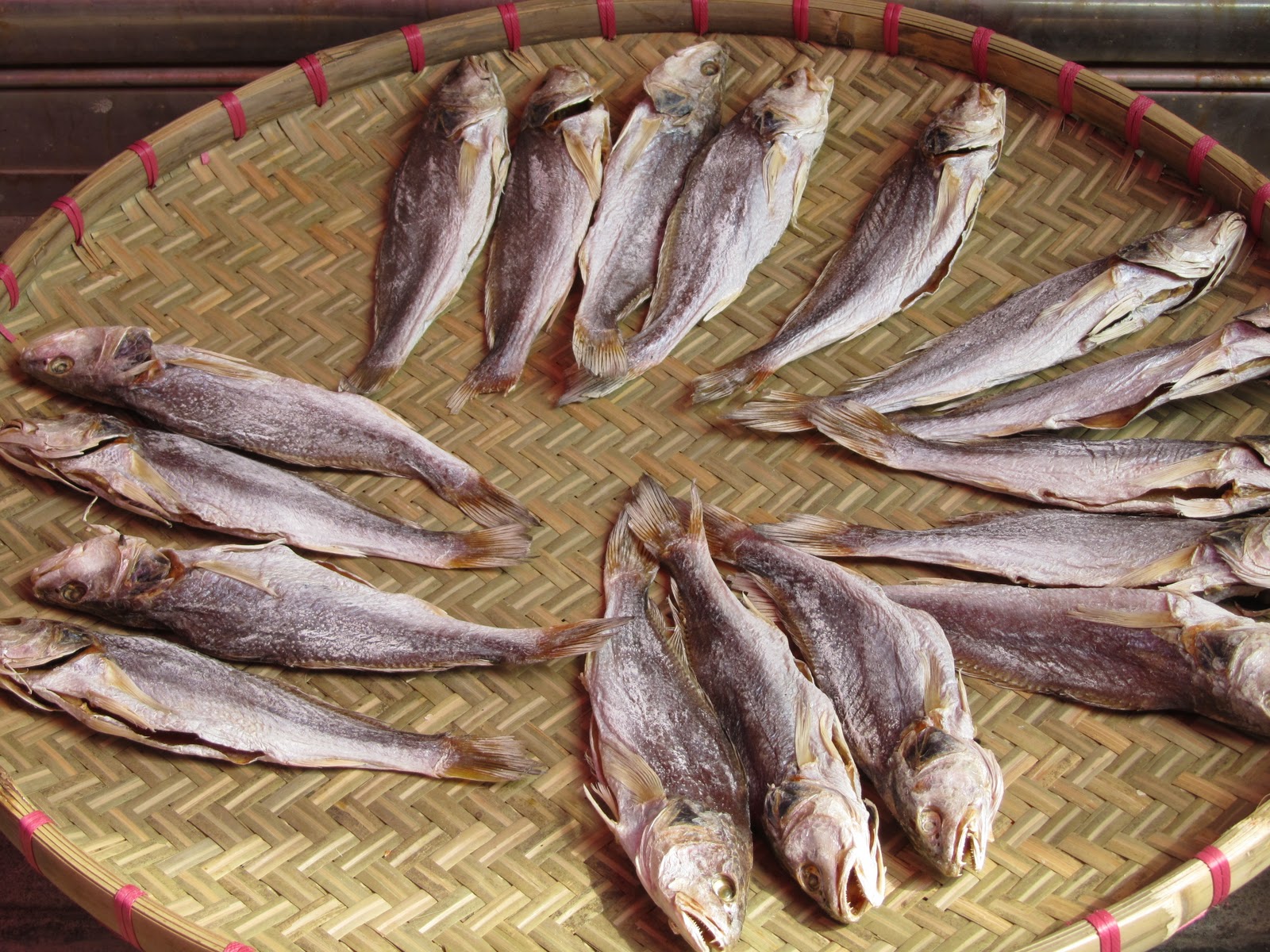

I do think that adjusting to Chinese cuisine and cooking would be a real challenge for the Westerner, it's perhaps the hardest cuisine to get enthusiastic about. Meanwhile, I get a desire for gallo pinto or nacatamales (Nicaragua) or chicken curry and roti or salt fish and bake (Guyana) about as often as I crave fish and chips or roast beef and Yorkshire pudding (England) showing the ability to adapt.
Monday, 7 November 2011
The Sly Company of People Who Care
One of the questions you are asked fairly often when you have lived in multiple countries is "Which was your favourite?". Even I am guilty of asking others despite the fact I always feel incapable of truly answering it justly myself. Each place is different and the place that is easiest to live might not always feel like the favourite.
What is my answer? Well so far (there's always room for changes in the future) the answer, after a pause for thought, has always remained the same: Guyana. I apologise to my Nicaraguan and Nicaragua based friends I have a very special place in my heart for Nicaragua too.
Why Guyana? There is no doubt many more comforts in life or places to visit were available in other locations. The reason is simple, it's emotional, not intellectual, Guyana was the first place where slowly I was allowed to be an insider even though I was an outsider. I started to understand some of the jokes, the satire, the sayings. I was included. Guyana and the Guyanese made me realise I would never again be 100% at home in my homeland. That's unsettling but it's also a blessing.
Like most people with a connection to Guyana it is a land that gives me much joy and delight and much frustration and despair. I am reading a brilliant book from the eyes of a twenty-six year old Indian who went to spend a year in Guyana, the write up describes "The Sly Company of People Who Care" as an "ambitious debut novel, Raul Bhattacharya has created a story that follows the shape and rhythms of life." The words novel and story imply fiction to me but the book includes so much facts and truth that I have no difficulty believing it is all true - all be it perhaps it seems fanciful to those who've not lived in Guyana. It makes me smile to read the Creole and the characters, I makes me melancholy and a little "homesick" to read of places I know and it makes me sad to read of the racism, violence and sense of despair underlying the day to day amusements.
Like Bhattacharya I am an outsider, right now in a new country and I can relate to his observation,
What is my answer? Well so far (there's always room for changes in the future) the answer, after a pause for thought, has always remained the same: Guyana. I apologise to my Nicaraguan and Nicaragua based friends I have a very special place in my heart for Nicaragua too.
Why Guyana? There is no doubt many more comforts in life or places to visit were available in other locations. The reason is simple, it's emotional, not intellectual, Guyana was the first place where slowly I was allowed to be an insider even though I was an outsider. I started to understand some of the jokes, the satire, the sayings. I was included. Guyana and the Guyanese made me realise I would never again be 100% at home in my homeland. That's unsettling but it's also a blessing.
Like most people with a connection to Guyana it is a land that gives me much joy and delight and much frustration and despair. I am reading a brilliant book from the eyes of a twenty-six year old Indian who went to spend a year in Guyana, the write up describes "The Sly Company of People Who Care" as an "ambitious debut novel, Raul Bhattacharya has created a story that follows the shape and rhythms of life." The words novel and story imply fiction to me but the book includes so much facts and truth that I have no difficulty believing it is all true - all be it perhaps it seems fanciful to those who've not lived in Guyana. It makes me smile to read the Creole and the characters, I makes me melancholy and a little "homesick" to read of places I know and it makes me sad to read of the racism, violence and sense of despair underlying the day to day amusements.
Like Bhattacharya I am an outsider, right now in a new country and I can relate to his observation,
Everything is linked. Every day you transacted with the world around you, and every day people you met in it knew something you didn't. Looking at smithereens of a bank window on tarmac they knew things I didn't. It could be debilitating, mystifying, desperate; I wanted to scratch my way in.I know given time, openness and the graciousness of the host country it is possible to scratch one's way in. I've done it before, more than once. But there is no doubt each time can be debilitating and mystifying, another set of unspoken rules, knowledge and assumptions of which my past gives me no experience. However there is a sense of deep satisfaction when you make progress and understand a phrase or a joke that would have meant nothing months before.
Sunday, 19 June 2011
To Blog or Not to Blog?
A question that I’ve had for a few years now but there are always three big deterrents that have held me back.
1. Firstly it of course seems terrible arrogant that I should think I have something sufficiently interesting to say that other people want to read it. It may be possible to have the occasional engaging thought, but can I manage it consistently? There is an idea among my friends that because I live in a foreign country my life is somehow more interesting, but after the first year you stop noticing most of the differences, life is normal just a different normal.
2. Secondly privacy seems to be a sensible thing, why would I want to put my musings in an almost uncontrollable public domain?
3. Finally on leaving Guyana, after it being my home for more than 3 years, a Guyanese friend gave me some good advice, he told me to be careful what I told people of Guyana and my experiences there. His reasoning was sound, almost everyone I would speak to would have no knowledge of Guyana and therefore their entire opinion of that country and its people would be based on what I said to them. Since few people know where Guyana is and it rarely makes the news he was perfectly right, for good or for bad I had become an unofficial “Ambassador” for Guyana and despite the difficulties you inevitably face living in a different culture and country I knew I wanted to be a good ambassador.
I have noticed that in some popular books of travel-writing the author seems to relish pointing out the idiosyncrasies of the host community to which he or she is visiting and the longer I live abroad the more that style of writing irritates me, it seems so superior trying to gain laughs at others’ way of doing things. It is inevitable that we will all notice differences when we spend time in other cultures, but I think to live well we need to recognise that differences have their reasons and “our” way of doing things may be better in some ways and “their” culture is better at others. I am not always successful at living with and among others culturally different from me with an attitude of learning, but I hope I’m getting better.
Being an outsider, sometimes we see more clearly and sometimes what we think we see we’ve totally misinterpreted. Being an outsider should mean we learn to see our own culture a little more clearly too and that also can be uncomfortable.
So, obviously, the fact you are reading this means I have decided to take the plunge and try to blog. Hopefully I will manage to be a good ambassador, but not a false one, and in that offer a little more understanding of our common humanity as well as offering a few of the cultural frustrations and mishaps that inevitably face “the outsider.”
Subscribe to:
Posts (Atom)