
Showing posts with label Palestine. Show all posts
Showing posts with label Palestine. Show all posts
Friday, 30 December 2011
Faith
Looking through this years photos today trying to pull some together for an end of year summary my eye was caught by the following that I took on the shores of the Sea of Galilee earlier this year.


Monday, 12 December 2011
Christmas Carols: O Little Town of Bethlehem
Every shopping experience in Manila since mid-November has involved Christmas carols and to my surprise most of them have been carols as opposed to Christmas songs like Jingle Bells and Frosty the Snowman. Joy to the World and Hark the Herald Angels seem to head the charts.
O little town of Bethlehem
How still we see thee lie
Above thy deep and dreamless sleep
The silent stars go by
Yet in thy dark streets shineth
The everlasting Light
The hopes and fears of all the years
Are met in thee tonight
I had the privilege to visit Bethlehem earlier this year to see the town where Christ was born, but to do that I had to pass through military checkpoints since the Israeli's through fear have encircled the town with a 30 foot high wall.


For Christ is born of Mary
And gathered all above
While mortals sleep, the angels keep
Their watch of wondering love
O morning stars together
Proclaim the holy birth
And praises sing to God the King
And Peace to men on earth
Needless to say the experience for tourists is surprising but fairly straightforward, however for the few Palestinians who have a permit to leave Bethlehem the experience is far different, like entering and leaving the "open-air" prison that they are subject to. The young Israeli soldiers who man the checkpoints and towers on the wall do not "watch with wondering love" the people of Christ's birth community.

How silently, how silently
The wondrous gift is given!
So God imparts to human hearts
The blessings of His heaven.
No ear may hear His coming,
But in this world of sin,
Where meek souls will receive him still,
The dear Christ enters in.
Palestinian Christians point out that if Jesus were born now the military restrictions would mean that Mary and Joseph could not make the journey from Nazareth (in Israel) to Bethlehem (in the West Bank). Fear is real and injustices many in the Holy Land and yet God is not disconnected from this pain, grief and anger. Jesus entered a world of sin, along with occupation and injustice. He did not enter because he had to, he entered because his love gave him no alternative. He was born in Bethlehem due to the occupying powers decree for a census for taxation.
O holy Child of Bethlehem
Descend to us, we pray
Cast out our sin and enter in
Be born to us today
We hear the Christmas angels
The great glad tidings tell
O come to us, abide with us
Our Lord Emmanuel
Sunday, 26 June 2011
Palestinian Walks
Not long finished reading "Palestinian Walks" by Raja Shehadeh, a Palestinian lawyer who lives in Ramallah and who founded Al-Haq human rights organisation before becoming an author. It was very helpful in increasing my knowledge after my visit to Israel and the West Bank and written in a very readable style. It is based around 7 hikes in the countryside of Palestine that the author made between the years of 1970 and 2007. My review is already posted on Amazon so I won't repeat that here. Palestinian Walks
Endeavouring not to quote too much, and thus breach copyright, I have selected a brief section from a conversation that Raja had when he stumbled on a gun-carrying Israeli settler on one of his walks (p 193-4 in the book). Settler is a term used for Israelis who live in Jewish only communities that have been built on land which is deemed to be Palestinian under international law. Settlements are seen as one of the five main issues that Israelis and Palestinians disagree on, as both Israelis and Palestinians know how difficult it will be for a resolution that gives Palestinians full access back to their land when there are, in many cases, large townships of Israelis living on Palestinian land. There was recently a temporary cessation of building of settlements at the request of the US government, but building has resumed. Shehadeh's conversation shows that even when Arabs and Jews live in close proximity, the barriers mean they still know nothing of each other.


Endeavouring not to quote too much, and thus breach copyright, I have selected a brief section from a conversation that Raja had when he stumbled on a gun-carrying Israeli settler on one of his walks (p 193-4 in the book). Settler is a term used for Israelis who live in Jewish only communities that have been built on land which is deemed to be Palestinian under international law. Settlements are seen as one of the five main issues that Israelis and Palestinians disagree on, as both Israelis and Palestinians know how difficult it will be for a resolution that gives Palestinians full access back to their land when there are, in many cases, large townships of Israelis living on Palestinian land. There was recently a temporary cessation of building of settlements at the request of the US government, but building has resumed. Shehadeh's conversation shows that even when Arabs and Jews live in close proximity, the barriers mean they still know nothing of each other.
"I suspected you were an Arab but was not sure. Arab's don't walk."
"How do you know that? Are you acquainted with many Arabs?"
"No. None at all."
"Then how did you come upon that conclusion?"
"Just from watching the village people nearby. I never see them taking walks or sitting by the water."
"Perhaps because they're afraid?"
"Why should they be afraid?"
"Because of you."
"Of me?"
"Yes aren't you carrying a gun?"
"I wish I wasn't. It's heavy and it's a burden. But as I said, I have to."
I couldn't help saying: "I suppose you do" in a heavily sarcastic voice though I regretted doing so almost immediately. I was inviting a fight when I had no stomach or inclination to get into one.
"What do you mean?" the settler snapped.
"To protect the land you've taken from us," I said in a matter of fact way, resigned to what was coming.
"We didn't take anyone's land. Dolev is built entirely on public land."
"Assuming it is, why should you be the only beneficiaries?"
"Because it was promised to us. All of Eretz Israel is ours."
"And where do you propose we live?""Eretz Israel" being the land included within the Biblical Promised Land. To understand the concept of how Israel determines "public land" within the Occupied Territories you'd have to read the book and if you're interested in such things I would certainly recommend it.

Countryside around Nazareth

Wilderness on the way to Jericho


A small Jewish settlement close to Bethlehem, near the Shepherd's fields
Saturday, 25 June 2011
Bethlehem's Pressures
Having visited Bethlehem earlier in this month in my first ever visit to Israel and Palestine, I was surprised to catch on BBC iPlayer last week an interview given by the Archbishop of Canterbury on "World at One" where he mentioned the pressure that Christians were under in Bethlehem as part of general comments on the difficulties Christians face in the Middle East. His rationale was that the Christian population was reducing due to migration partly for economic reasons and also as a result of the pressure that they felt due to the movement of more Muslims into the area as they in turn escaped the pressures of other towns like Hebron. Archbishop of Canterbury on World at One 14 June 2011
Not once in the interview did the Archbishop mention the words "Israel" or "occupation". Whatever one's views of the Israel/Palestinian problem it is not possible to talk about the situation of Christians in Bethlehem or any other part of the West Bank without mentioning Israel. Hearing the interview reminded me of an article I'd read in The Guardian the week before I went to Israel on the bias in the BBC's reporting on Israel and Palestine and the strength of the pro-Israel lobby in challenging anything reported which they could see as negative about their actions in Israel or the Occupied Territories. Had the Archbishop been told he couldn't mention Israel? And why would he comply with such a comment? Dr Rowan Williams seems a highly intelligent man with a desire for justice, why would he so misrepresent the situation? Certainly Christians in Bethlehem were not pleased with his comments. Letter from Kairos Palestine. It is important to be able to speak out against Israeli state policy or unjust incidents, without being afraid of the challenge of being anti-Semitic. If for example I were to speak out against the war in Iraq and British policy there it does not make me anti-British, simply opposed to a policy.
During our 5 days in Bethlehem as a church group we had the privilege of meeting a number of Palestinian Christians of different denominations, all of whom under difficult circumstances believed in non-violent means of attaining justice and peace for Palestine. Not one of them mentioned pressure from an increased Muslim population in the town, all be it that there has been an increase. Instead they mentioned the oppression of the 9m high wall which surrounds the town and most of the West Bank, including large areas that the UN in 1948 allocated to Palestine. Only about 5% of the Bethlehem population have permits to go into Israel on the other side of the wall and the few that can go to work in Jerusalem only 6 miles away have to queue for at least 2 hours each morning to get through the security checkpoints at the one exit Palestinians are allowed to use. The wall and it's watchtowers dominate the town and as in all the West Bank divide people from their land or their customers. As a couple of Bethlehem residents commented wryly, if Jesus were to be born these days, the wall and checkpoints would prevent Mary and Joseph from reaching Bethlehem from Nazareth. Worse still are the checkpoints within the West Bank which limit the movement of Palestinians from one town to another that are supposedly under their control as part of the Oslo Accord.


What I did learn during my 7 days in the Holy Land is far more than I can fit in a few blog posts, but despite the fact I thought I was a person with an above average grasp of world affairs I realised more than anything how little I really knew, how difficult solutions are but how unsustainable the current oppression of Palestinians is and how difficult Israeli policy makes it for everyday Israelis and Palestinians to get to know one another. Israel, however is certainly not alone in this world, in taking the natural shock and fear related to acts of violence which have been perpetuated against their people (as well as the Palestinians) and using it to breed a culture of fear and of the idea of having a superior claim to righteousness in one's cause. Sadly over the last century a far greater number of Jews have lost their lives at the hands of Europeans than of Arabs.
I suspect reflections on my trip will constitute the main part of the next few posts I make, but for now I'll end commenting on how surprised I was with the warmth of the welcome we felt from the people we met in Bethlehem, not only our guides and special guests, but people working in shops and wedding guests awaiting the exit of the bride and groom at the Church of the Nativity. I could walk alone on the streets without feeling the unease you can in some other parts of the world.
Not once in the interview did the Archbishop mention the words "Israel" or "occupation". Whatever one's views of the Israel/Palestinian problem it is not possible to talk about the situation of Christians in Bethlehem or any other part of the West Bank without mentioning Israel. Hearing the interview reminded me of an article I'd read in The Guardian the week before I went to Israel on the bias in the BBC's reporting on Israel and Palestine and the strength of the pro-Israel lobby in challenging anything reported which they could see as negative about their actions in Israel or the Occupied Territories. Had the Archbishop been told he couldn't mention Israel? And why would he comply with such a comment? Dr Rowan Williams seems a highly intelligent man with a desire for justice, why would he so misrepresent the situation? Certainly Christians in Bethlehem were not pleased with his comments. Letter from Kairos Palestine. It is important to be able to speak out against Israeli state policy or unjust incidents, without being afraid of the challenge of being anti-Semitic. If for example I were to speak out against the war in Iraq and British policy there it does not make me anti-British, simply opposed to a policy.
During our 5 days in Bethlehem as a church group we had the privilege of meeting a number of Palestinian Christians of different denominations, all of whom under difficult circumstances believed in non-violent means of attaining justice and peace for Palestine. Not one of them mentioned pressure from an increased Muslim population in the town, all be it that there has been an increase. Instead they mentioned the oppression of the 9m high wall which surrounds the town and most of the West Bank, including large areas that the UN in 1948 allocated to Palestine. Only about 5% of the Bethlehem population have permits to go into Israel on the other side of the wall and the few that can go to work in Jerusalem only 6 miles away have to queue for at least 2 hours each morning to get through the security checkpoints at the one exit Palestinians are allowed to use. The wall and it's watchtowers dominate the town and as in all the West Bank divide people from their land or their customers. As a couple of Bethlehem residents commented wryly, if Jesus were to be born these days, the wall and checkpoints would prevent Mary and Joseph from reaching Bethlehem from Nazareth. Worse still are the checkpoints within the West Bank which limit the movement of Palestinians from one town to another that are supposedly under their control as part of the Oslo Accord.


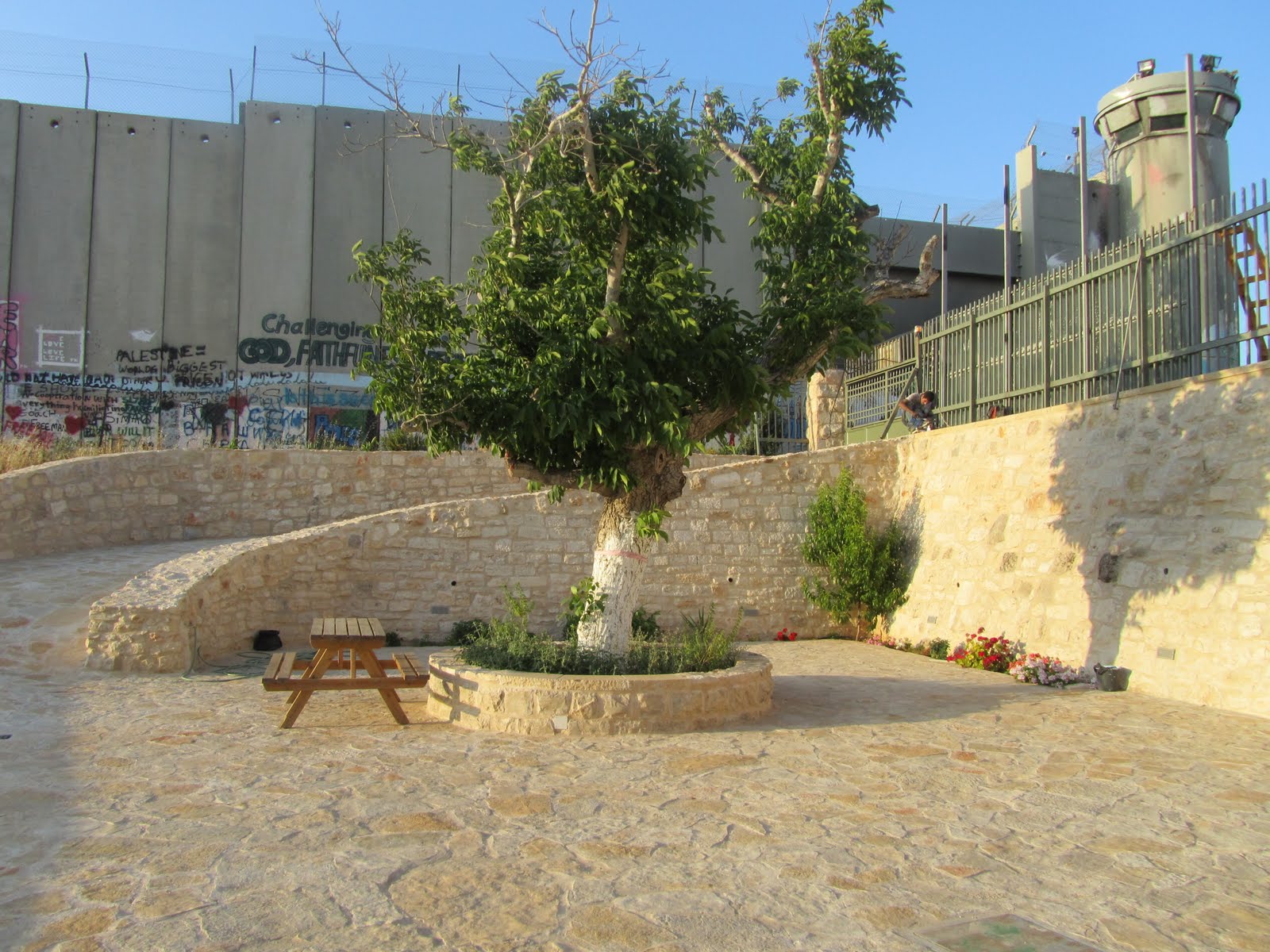

What I did learn during my 7 days in the Holy Land is far more than I can fit in a few blog posts, but despite the fact I thought I was a person with an above average grasp of world affairs I realised more than anything how little I really knew, how difficult solutions are but how unsustainable the current oppression of Palestinians is and how difficult Israeli policy makes it for everyday Israelis and Palestinians to get to know one another. Israel, however is certainly not alone in this world, in taking the natural shock and fear related to acts of violence which have been perpetuated against their people (as well as the Palestinians) and using it to breed a culture of fear and of the idea of having a superior claim to righteousness in one's cause. Sadly over the last century a far greater number of Jews have lost their lives at the hands of Europeans than of Arabs.
I suspect reflections on my trip will constitute the main part of the next few posts I make, but for now I'll end commenting on how surprised I was with the warmth of the welcome we felt from the people we met in Bethlehem, not only our guides and special guests, but people working in shops and wedding guests awaiting the exit of the bride and groom at the Church of the Nativity. I could walk alone on the streets without feeling the unease you can in some other parts of the world.
Subscribe to:
Posts (Atom)